
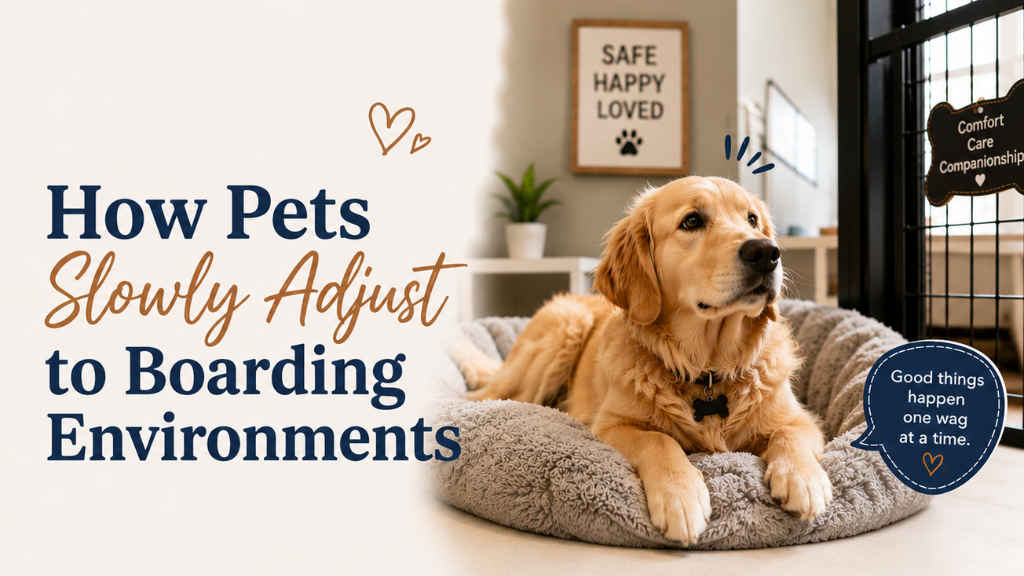
How Pets Slowly Adjust to Boarding Environments
Travelling with pets is not always possible with the following reasons: –
- Work trips happen.
- Family functions happen.
- Emergencies happen.
- Sometimes people simply need a safe place where their pets can stay comfortably for a few days.
Because of this, pet boarding services are growing rapidly across cities like Gurugram and nearby areas like Palam Vihar, Sector 22, Sector 23, Sector 45, Sector 37, nearby areas of Gurugram Bus Stand, Sohna Road, Cyber City, MG Road, Udyog Vihar and Golf Course Road.
But, the following question stays common among all the pet parent:
“Do dogs adjust to being boarded?”
“Will my pet actually adjust to boarding?”
“Will my pet actually adjust to boarding?”
This is true, that concern is real for pet parents.
Pets don’t suddenly become comfortable in a new place. Most animals need time to observe, understand the surroundings, and slowly feel safe for them.
We at MS Dog Training and Boarding House (MS Happy Pet), this is something seen regularly, especially with first-time boarding pets. Some adjust within hours. Some need a little more patience.
Pet boarding demand is growing every year in India
Pet care in India has changed a lot in the last few years.
Earlier, many people depended on neighbours, relatives, or friends while travelling. Now pet parents are actively looking for proper pet boarding facilities with supervision, routine care, and safer environments.
According to Redseer Strategy Consultants’ 2024 pet care industry report, India’s pet care market is expected to cross ₹21,000 crore by 2028. Boarding, grooming, daycare, and wellness services are growing steadily, especially in urban cities.
And cities like Gurugram are a big part of this growth.
Long work schedules, travel, and apartment living have changed how people care for pets. At the same time, pets have also become more emotionally attached to home routines after 2020, especially during the work-from-home period.
You can notice this clearly now.
Many dogs today stay much closer to family members throughout the day compared to earlier years. Because of that, some pets need a little extra time while adjusting during boarding stays.
Why pets react differently in boarding environments
This is the universal fact that every pet behaves differently.
Some dogs become comfortable within a few hours. Others stay cautious for one or two days. Cats usually prefer observing quietly before exploring. Rabbits also remain alert during the beginning.
This usually depends on:
- personality
- previous social exposure
- attachment to home routine
- age
- energy level
Social pets often settle faster. Senior pets usually take more patience.
The first few hours usually feel unfamiliar
Most pets don’t immediately start playing or interacting.
Many dogs quietly walk around and observe the environment first. Some sit near the entrance for some time. Some keep looking around for familiar sounds or smells.
Cats usually choose one comfortable spot first and observe everything from there.
This stage is expected.
In many situations, pets are simply trying to understand whether the place feels safe.
One Labrador that recently boarded at MS Happy Pet spent the first couple of hours quietly sitting near the gate and watching people move around. By the next morning, he had already started following the regular walk routine comfortably and interacting during feeding time.
That gradual shift happens often.
Why familiar routine helps pets settle faster
One thing that usually helps pets adjust better is familiarity.
We at MS Happy Pet, the focus is not on suddenly changing the pet’s lifestyle or creating an entirely different routine. Existing habits are followed as closely as possible during the beginning.
That includes:
- feeding timing
- walking schedule
- sleeping habits
- regular food
- comfort patterns
Dogs rely heavily on routine and scent recognition. That’s one reason familiar bedding, blankets, or toys sometimes help reduce stress during boarding stays.
Once pets begin recognising regular timing and familiar interaction, they usually start relaxing naturally.
Some pets eat less initially and that is common in your loving Pets
This part worries many pet parents.
But honestly, it happens quite often.
A new environment can temporarily affect appetite, especially for pets strongly attached to home surroundings. Some dogs skip one meal. Some cats eat less during the first day.
Usually, once they recognise familiar interaction, handlers, and regular meal timing, eating improves gradually.
Sometimes by the next meal.
Sometimes after a day or two.
Usually by the second morning, many pets already begin responding more comfortably during feeding and walks. Staff members notice body posture changing too. Pets start appearing less alert and more relaxed.
What the first night usually feels like
Night-time feels different for many pets.
The surroundings become quieter. Some dogs stay more alert during the first night and may bark more than usual. Some wake up more frequently because the environment still feels unfamiliar.
Cats usually prefer staying in one safe corner initially.
This generally improves gradually once pets realise the environment remains calm and predictable.
Why calm boarding environments usually work better
Very noisy or overcrowded spaces can increase stress in some pets.
Balanced environments generally help better:
- regular walks
- supervised interaction
- quiet sleeping areas
- proper rest time
- familiar routine
Too much stimulation can overwhelm some pets.
How pets slowly show signs of adjustment
Adjustment doesn’t happen dramatically.
Usually it appears in small ways:
- appetite improves
- body posture relaxes
- sleep becomes normal
- curiosity increases
- pets respond comfortably to handlers
These small changes usually show that pets are beginning to feel secure.
Pros and cons of boarding for pets and pet parents
What usually helps
For pets
- supervised care during owner absence
- regular feeding and movement
- interaction and observation
- safer than staying alone for long periods
For pet parents
- peace of mind during travel
- regular monitoring
- structured care for pets
- less dependence on untrained caretakers
What can feel difficult initially
For pets
- temporary anxiety in new surroundings
- reduced appetite initially
- missing familiar home environment
- adjustment period during first stay
For pet parents
- emotional stress during first boarding
- guilt about leaving pets behind
- worry about eating or behaviour changes
Honestly, most first-time pet parents go through this phase.
That’s normal too.
How boarding experiences are changing now
Earlier, boarding mostly meant basic shelter and feeding.
Now expectations are different.
Pet parents look for:
- routine-based care
- cleaner sleeping areas
- calmer environments
- supervised interaction
- gradual adjustment support
The industry itself is changing because pets are now treated much more like family members rather than animals temporarily staying somewhere.
And this shift is growing every year.
What this really comes down to
Pets do not suddenly feel comfortable in a new environment.
First, they observe the new place, people and their action.
Then they slowly begin recognising:
- regular meal timing
- safe resting areas
- familiar interaction
- predictable routine
That’s usually how comfort starts building.
Gradually.
Boarding support at MS Happy Pet
At MS Happy Pet, boarding care for dogs, cats, and rabbits is handled with patience and gradual adjustment. The focus stays on helping pets feel comfortable by respecting their existing routine first instead of changing everything immediately.
Because in many situations, pets settle better when things feel familiar.
Summary
Most pets feel uncertain during the beginning.
That part is expected.
But with patience, familiar routine, and calm interaction, they usually begin settling slowly. One meal. One walk. One comfortable moment at a time.
And eventually, the environment stops feeling unfamiliar.
FAQs on How Pets Slowly Adjust to Boarding Environments
1. How do pets usually adjust at pet boarding in Sector 45 Gurgaon?
Most pets don’t become comfortable immediately. Some dogs keep looking around or stay near the gate for a while. Usually after a few meals, walks, and familiar interaction, they slowly start relaxing.
2. What is the first day like at pet boarding in Sector 37 Gurgaon?
The first day is usually a little confusing for pets. Some start exploring quickly. Some stay quiet and observe everything first. That’s pretty common, especially for first-time boarding pets.
3. Is pet boarding in Sector 22 Gurgaon okay for first-time pets?
Yes, usually it works out well when pets are given time and their existing routine is followed properly. Most first-time pets stay alert initially, then slowly begin settling once things start feeling familiar.
4. How long do dogs take to settle at pet boarding near Palam Vihar Gurgaon?
There’s no exact timeline honestly. Some dogs settle the same day. Others take a day or two. Pets who are very attached to home sometimes need a little more patience during the beginning.
5. Do cats and rabbits adjust properly during pet boarding in Gurugram?
Usually yes, but they often need quieter space in the beginning. Most cats prefer observing first instead of interacting immediately. Rabbits also stay cautious initially, then slowly become more comfortable once the environment feels safe.
Also read: Pet Boarding Services in Palam Vihar, Gurgaon, Why Dog Boarding Is Growing in Urban Cities Like Gurgaon, Dog Boarding Needs of Working Professionals, Pet Boarding in Sector 22 & 23 Gurgaon, Pet Boarding in Sector 37 Gurgaon and Nearby areas, Dog Boarding in Gurgaon